A great photograph is one that fully expresses what one feels, in the deepest sense, about what is being photographed, and is, thereby, a true manifestation of what one feels about life in it's entirety. . . I believe in photography as one means of achieving an ultimate happiness and faith! - Ansel Adams


Tuesday, 28 September 2010

Window shooting (Part 1) and photography tips for shooting sunsets & moons

"I enjoy travelling and recording far-away places and people with my camera. But I also find it wonderfully rewarding to see what I can discover outside my own window. You only need to study the scene with the eyes of a photographer."
- Alfred Eisenstaed
A Bat flies across the setting sun in Mulund

Wednesday, 22 September 2010

Shades of melancholy in black & white...


In my "humble" opinion Black & White (B&W) photography is perhaps one of the purest forms of photography. B&W stands on its own feet - on the strength of composition and mood, without the glamour (so to speak) of colour. I have also generally found that street photography is more appealing when seen in B&W - maybe it's because B&W brings out the starkness and hence help convey the mood better. To paraphrase it in a literary fashion - street-photography has the onerous task of capturing the shades of grey in our society and what better than using the shades of grey to portray them! It could also be because the works of Henri Cartier-Bresson (which were in B&W), the legendary photographer and father of street photography, continue to inspire photographers to this day, resulting in an immense amount of B&W work being done despite the colour capabilities of today's cameras.

Initially I had planned to share these pictures as part of another larger theme-based post, but then I had a feeling that they would get lost somewhere in the array of pictures (like so many of my other portraitures). Hence, this small post depicting some of the shades of melancholy which I observed recently.

A trumpet player in a Western-styled band

Wonder why the faces of most trumpet players appear melancholic and hardened to me? This man was otherwise quite jolly and would wink at me after finishing his bit!

Thursday, 16 September 2010

Musical Bands of Mumbai 1 – the Dhol-tasha band


Young boy playing cymbals
The arrival of the month of August heralds a long period of celebration for the majority of Indians. Starting with the Parsi New Year and ending with Christmas, it encompasses diverse festivals like Onam, Janamashthami, Ganesh Chaturthi, Paryushana, Eid, Navratri, Dussehra, and Diwali. It is the season of revelry, food (read sweets), music, penance, et al. In this and subsequent posts, I am sharing with you the images of people who get us swinging to their distinctly folksy beats during these festivals - the musical bands. Our first band is Maharashtra's famed Dhol-Tasha band.

If during a festival in Maharashtra you have heard the drums roll, clatter and create a deep resounding sound, then in all probability you have heard the dhol-tasha band play. As the name suggests, the band members play an assortment of drums (large and small) along with hand cymbals to create various taal (rhythm) synchronisations. The group members (more than 10 in number) are both young and old and sometimes also include children. Of late even women have started joining these bands (that should impress the women's rights groups)! During the Ganesh Chaturthi festival one gets to see the best of these groups. They typically rehearse for months and develop new taals to be in the reckoning of the large Ganesh mandals who hire them for the processions.
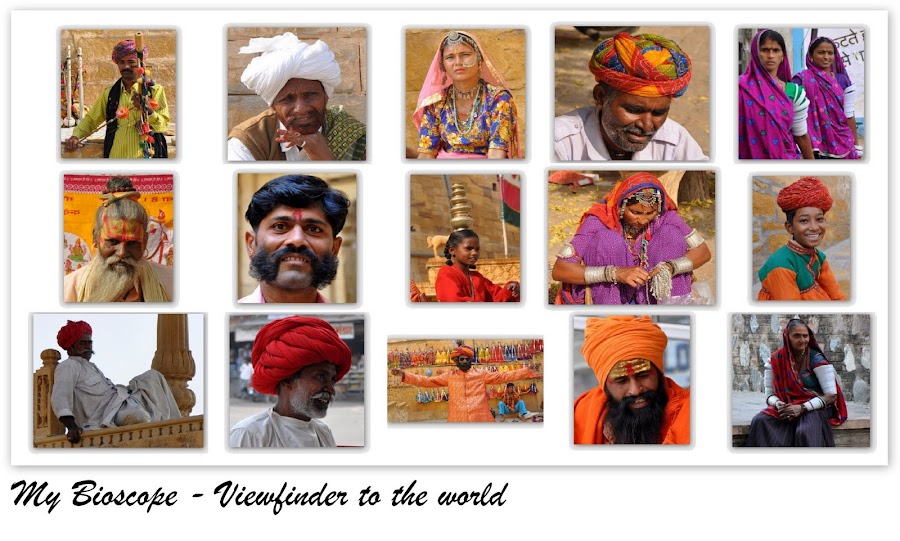
Sunday, 22 August 2010

Sanjay Gandhi National Park, Shilonda trail - A walk in the woods!


Mumbai, aptly called Maximum City by Suketu Mehta in his book by the same name, is a city of contrasts. One such element is the presence of a National Park in the midst of what is India's busiest metropolis. Which other metropolis in the world can boast of such a privilege? To most Mumbaikars (especially of the types born and brought up in the city like me), the 104 sq. Km Sanjay Gandhi National Park (SGNP) brings back memories of an unspoilt childhood when our parents would take us to the park on a lazy Sunday for a jungle safari or an excursion to the famed Kanheri Caves (they are 2400 years old!) and of course those lovely school picnics. Alas, as we have grown up, and through the boom years, places such as these have only remained confined to memories for most people.

Thursday, 19 August 2010

Say cheese! It's the World Photography Day!


Today, across national boundaries, most photography lovers like me are celebrating the World Photography Day. Photography is a hobby which gives me immense joy and helps me discover this world in ways different from a casual observer. The thrill of having visualised something (a story or a moment) and being able to capture it "forever" is something indescribable. Photography has now been around for over 150 years and yet, as a medium of communication, it still remains the most powerful. This is owing to its ability to convey reality as well as the mood in a manner that directly appeals to the sensibility of the viewer.

On this day, I am sharing with you one of my favourite clicks - a picture that I took recently on a rainy Sunday morning while out on a nature walk inside the Sanjay Gandhi National Park, Mumbai. While I was strolling inside the park and enjoying the greenery, I came across a house where a boy, seated outside on the rocks, was quietly observing a heated conversation between two people. As I observed closely, I saw that his face was melancholic (probably saddened by the commotion), he was poorly dressed and was looking in a direction away from the bicycle leaning against the house. That's when I took this picture...

Whither Childhood?
Whither Childhood! - one of my favourite clicks!

Sunday, 25 July 2010

Maharashtra Nature Park, Mumbai: Butterfly diaries and more…


Maharashtra Nature Park, also called the Mahim Nature Park (MNP), is a 15 hectare (37 acres) patch of green in Mumbai, which comes as a shock (albeit a pleasant one) to anybody who visits it, especially during the monsoons. One of the reasons for the surprise is, apart from the fact that it is situated in Mumbai - a concrete jungle with sky high land prices, its location “within” Mumbai! How does this sound for a place that resembles a mini forest? – located on the Southern bank of the dirty Mithi River and squeezed between Asia's largest slum Dharavi and Mumbai's most sought after business location, the Bandra Kurla Complex!

Wednesday, 14 July 2010

Lahaul - Spiti Valley Jeep Safari: Notes & anecdotes from a 7 day odyssey through the middle land!


Connoisseur’s delight…door to freedom...

Komic
If you are not averse to any of these -

  • living at an average altitude of 4,250 metres in a cold desert;
  • travelling on narrow (single lane), gravel and water filled roads winding through the Himalayas, which stare thousands of feet down into a violent river, and where road blocks due to landslides and snowfalls are as common as the day and night;
  • living without newspaper and telecommunication network (save for BSNL) in a place unscathed by modernity;
then Spiti is the place for you - the connoisseur traveller, the solitude seeker, the adventurer!

Spiti Valley came on my radar a couple of years back while researching some exotic driving holidays in the Himalayas. I was instantly taken in. Ladakh had been on my travel list for over seven years (since the time the populace had not even heard about it), but seeing the swarm of casual tourists thronging to it since the release of 3 Idiots, I decided that it had to be Spiti that I must visit this time around, before the hotels over there too started dishing out thalis!

View of Spiti Valley from Kye Monastery
Spiti, which means ‘the middle country’, is the land of ragged and snow capped mountains that reach out to the clear deep blue skies. Here, in the cold desert, trees are scarce and the moonscape expansive. Spiti is the land of several perennial rivers - Spiti, Pin, Chandra - whose gurgling sounds will soothe you in the night and whose ferocity will awe you when you travel alongside them in the day time. Ah, and not to mention the placid, azure blue lakes like Chandra Taal, Nako, Dhankar. The observer would also be struck by some of the most beautiful canyons and the most unusual clay and rock formations along the river bed and in the mountains. The continuity of the landscape is only broken by numerous waterfalls and glaciers, including one of world's largest non-polar glaciers - Bara Shigri.

Saturday, 5 June 2010

Tadoba Andhari Tiger Reserve, Maharashtra, India - A journey into the wild!

Planning a "hot" weekend excursion... Two months back a casual discussion with my friend on visiting a national park for our May – June sojourn threw up Tadoba - Andhari Tiger Reserve (TATR), located in the Indian State of Maharashtra, as an option. The park was not only brimming with tigers, but we had also never been there earlier, and the place had been in news as a number of tiger cubs had been born there in the past 12 months. The best part was that we could cover the place over a weekend! While we knew that temperatures in this part of the country could touch 48 degrees Celsius in May – June, we also knew that summers were the best time to sight tigers and the number of casual tourists too would be fewer. Coming close on the heels of my visit to the Ranthambhore National Park, I was naturally excited about the prospect. Deciding to look no further, we packed our bags and set sail....
 
For a slide show of complete set of pictures from Tadoba - Andhari Tiger Reserve, please click HERE.


Exploring the wild side of Maharashtra... Also called the "Jewel of Vidarbha", Tadoba - Andhari Tiger Reserve is Maharashtra's oldest National Park located in the Chandrapur district, about 155 KM from the Nagpur International Airport. TATR is home to about 43 Royal Bengal Tigers (Panthera Tigris Tigris - India's National Animal), some 80 species of other mammals and 280 species of birds. A Southern Tropical Dry Deciduous Forest, it is largely a flatland with 40 per cent of its area covered with bamboo trees, which gives it a unique appearance. Compared to other popular tiger reserves in India, TATR is relatively under-explored and under-photographed. The place has only of late been attracting tourists and is slowly coming up on the Indian wildlife circuit. At the moment, however, people from the Nagpur - Chandrapur belt comprise bulk of the tourists.

Tuesday, 18 May 2010

Birds of Ranthambhore National Park, India


This is a follow-up article to my previous post “The Tigers of Ranthambore”.
For a slide show of complete set of pictures of the Birds of Ranthambhore, please click here.
The Royal Bengal Tiger is the magnet that attracts thousands of visitors every year to the Ranthambhore National Park. However, birds form an equally important part of the biodiversity of this park’s ecosystem and one cannot help but admire their beauty and melodious voice. In fact on occasions, when sighting a tiger proves elusive, bird watching keeps your spirit buoyed.

Wednesday, 12 May 2010

The Tigers of Ranthambhore National Park, India


“A Tiger is a large-hearted gentleman with boundless courage and that when he is exterminated – as exterminated he will be unless public opinion rallies to his support – India will be the [sic] poorer, having lost the finest of her fauna.”
 – Jim Corbett, Man-Eaters of Kumaon (1944)
Related Posts Plugin for WordPress, Blogger...
 
Creative Commons License
This work by Maneesh Goal is licensed under a Creative Commons Attribution-Noncommercial-No Derivative Works 2.5 India License.